Real vs Lab-Grown Diamonds: Complete Guide to Differences, Facts, and Expert Insights
Diamonds have always been a symbol of beauty, commitment, and status. But today, there’s a new conversation happening — real diamonds versus lab-grown diamonds.
If you’ve ever felt confused about which one is better, you’re not alone. Many people struggle to understand the differences, benefits, and long-term value of both options.
This guide breaks everything down in a simple and honest way. No jargon. No confusion. Just clear insights you can actually use.
What Are Natural Diamonds?
Natural diamonds are formed deep inside the Earth under intense heat and pressure over billions of years. These stones are brought closer to the surface through volcanic activity and then mined.
Key Characteristics of Natural Diamonds
- Formed naturally over millions to billions of years
- Each stone has unique inclusions and patterns
- Often associated with rarity and long-term value
- Traditionally used in engagement and heirloom jewelry
Because of their natural origin, many people see them as emotionally and historically meaningful.
What Are Lab-Grown Diamonds?
Lab-grown diamonds, also known as synthetic or manufactured diamonds, are created in controlled environments using advanced technology. These labs replicate the same conditions found in nature.
Are Lab Grown Diamonds Real?
Yes, they are real diamonds.
They have the same physical, chemical, and optical properties as natural diamonds. The only difference lies in how they are formed.
Key Characteristics of Lab Diamonds
- Created in laboratories using modern technology
- Produced in a shorter time compared to natural formation
- Visually and structurally identical to natural diamonds
- Often more consistent in clarity and color
This is why the discussion around synthetic diamonds vs real diamonds can be confusing. In reality, both are genuine diamonds, just with different origins.
Lab Grown Diamonds vs Natural Diamonds: Core Differences
Understanding the difference between lab diamonds and real diamonds becomes easier when you look at a few key factors.
Origin and Formation
Natural diamonds are formed in the Earth, while lab created diamonds are produced in controlled environments.
This is the most fundamental difference between lab created diamond vs earth.
Appearance
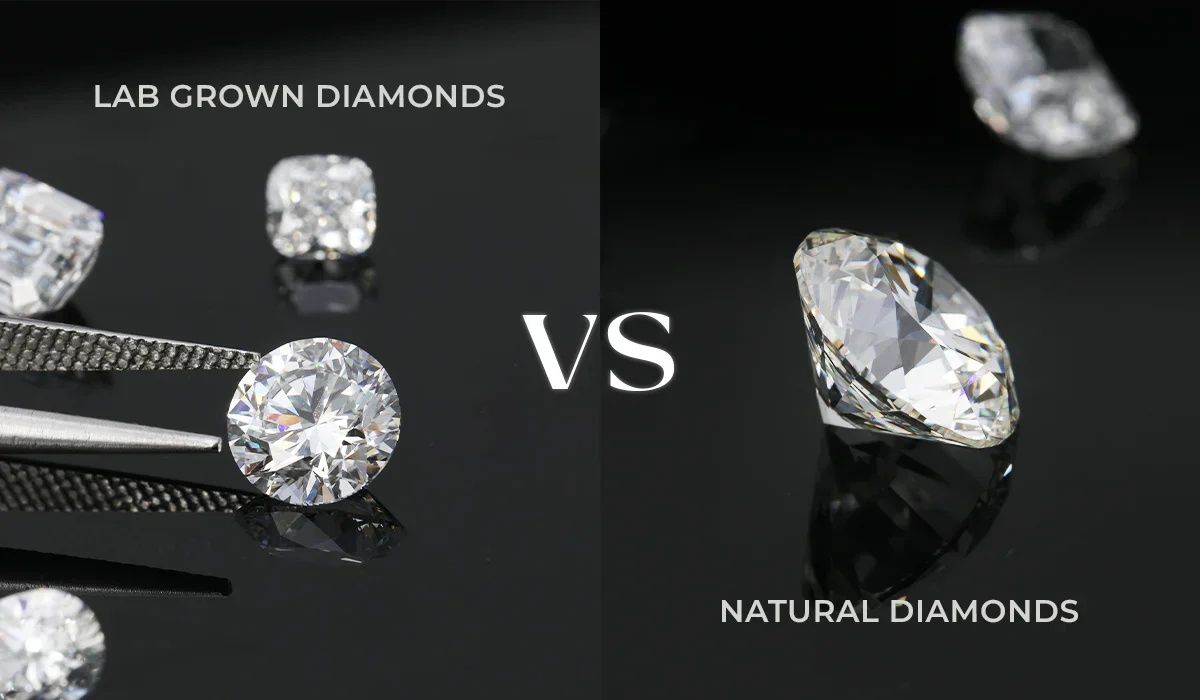
When comparing lab grown diamond vs real diamond appearance, there is no visible difference to the naked eye.
Even trained professionals need special equipment to identify the origin.
Certification
Both types can be graded and certified based on the 4Cs: cut, color, clarity, and carat.
Certified lab grown diamonds vs natural stones follow similar grading standards, ensuring transparency in quality.
Natural vs Synthetic Diamonds Comparison: Quality Factors
When it comes to quality, both options perform similarly.
Cut, Color, Clarity, and Carat
Lab grown diamond quality comparison often shows that lab diamonds can have fewer inclusions. This is because their growth process is controlled.
Natural diamonds, on the other hand, may have unique internal characteristics that add to their individuality.
Consistency
Lab diamonds are often more consistent in appearance. Natural diamonds vary more, which some people prefer for their uniqueness.
Real Diamond vs Lab Diamond Durability
Durability is one of the most important factors when choosing a diamond.
Both natural and lab-grown diamonds score 10 on the Mohs hardness scale. This means they are equally resistant to scratches and suitable for everyday wear.
Practical Example
If you wear a diamond ring daily, whether it’s natural or lab-grown, it will handle regular use just as well.
There is no compromise in strength when choosing a lab diamond.
Lab Grown Diamonds vs Real Diamonds Price Differences
While avoiding direct pricing discussions, it’s important to understand the general comparison.
Lab-grown diamonds are typically more accessible in terms of pricing compared to natural diamonds of similar size and quality.
This makes them appealing for people who want larger stones or higher clarity within a specific budget range.
Lab Grown Diamonds Pros and Cons
Every option has its advantages and limitations. Let’s look at both sides.
Advantages of Lab-Grown Diamonds
- More affordable compared to natural diamonds
- Environmentally controlled production
- High clarity and fewer inclusions
- Modern and innovative appeal
Limitations of Lab-Grown Diamonds
- Lower long-term resale perception
- Less rarity compared to natural diamonds
- Emotional value may differ for some buyers
Natural Diamonds Investment vs Lab Grown
When discussing best diamonds for long term investment, natural diamonds generally hold stronger historical value.
Why Natural Diamonds Are Seen as Investment Pieces
- Limited supply from nature
- Long-standing market demand
- Cultural and emotional significance
Lab Diamonds and Investment Perspective
Lab diamonds are more about accessibility and modern choice rather than long-term financial value.
They are ideal for those who prioritize appearance and practicality over traditional investment thinking.
Lab Grown vs Synthetic Diamonds: Is There a Difference?
The terms lab grown vs synthetic diamonds are often used interchangeably.
Technically, both refer to diamonds created in laboratories. However, “lab-grown” is more commonly used in consumer markets because it sounds more appealing.
Artificial vs Natural Diamonds: Emotional Value
Beyond physical properties, emotional value plays a big role.
Natural Diamonds
- Associated with tradition and legacy
- Often passed down through generations
Lab-Grown Diamonds
- Represent innovation and modern thinking
- Popular among younger buyers and tech-forward consumers
Real-Life Example
Someone choosing an engagement ring might prefer a natural diamond for its symbolic value. Another person might choose a lab-grown diamond to prioritize size and clarity within their budget.
Both choices are valid and depend on personal priorities.
Difference Between Lab Created and Earth Created Diamonds
Let’s simplify the comparison further.
Lab Created Diamonds
- Made using advanced technology
- Faster production time
- More predictable quality
Earth Created Diamonds
- Formed naturally over billions of years
- Unique inclusions and characteristics
- Higher perceived rarity
Diamond vs Lab Created: Which One Should You Choose?
There is no universal answer. The right choice depends on what matters most to you.
Choose Natural Diamonds If You Value
- Tradition and heritage
- Long-term investment potential
- Unique natural formation
Choose Lab-Grown Diamonds If You Prefer
- Better value for size and clarity
- Modern and ethical approach
- Consistent quality
Certified Lab Grown Diamonds vs Natural: Why Certification Matters
Certification ensures that you know exactly what you’re getting.
Both lab-grown and natural diamonds can be certified by recognized grading organizations.
What Certification Confirms
- Authenticity of the diamond
- Quality based on the 4Cs
- Transparency in origin
This helps you make an informed decision, whether you’re comparing real vs manufactured diamonds or exploring synthetic diamonds vs real diamonds.
Common Myths About Lab-Grown Diamonds
Let’s clear up a few misunderstandings.
Myth 1: Lab Diamonds Are Fake
Reality: They are real diamonds with identical properties to natural ones.
Myth 2: They Don’t Last
Reality: Lab diamonds are just as durable as natural diamonds.
Myth 3: They Look Different
Reality: There is no visible difference without specialized tools.
Final Thoughts: Making the Right Choice
The debate between lab grown diamonds vs natural diamonds is not about which one is better. It’s about which one fits your needs.
If you care about tradition, rarity, and long-term value, natural diamonds may feel more meaningful.
If you want modern innovation, better value for appearance, and consistent quality, lab-grown diamonds are a strong option.
In the end, both are real diamonds. Both are beautiful. And both can hold deep personal meaning depending on how you choose to wear and value them.